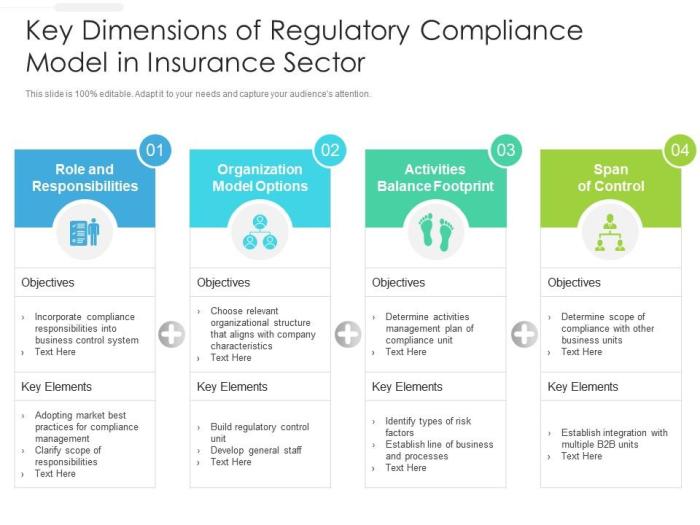
Delving into Legal Compliance in Insurance Industry, this introduction immerses readers in a unique and compelling narrative, with a casual formal language style that is both engaging and thought-provoking from the very first sentence.
Exploring the critical role of legal compliance in the insurance sector and its impact on industry practices and regulations.
Legal Compliance in Insurance Industry

Legal compliance in the insurance industry is of utmost importance to ensure that insurance companies operate within the boundaries of the law and provide fair and transparent services to policyholders. Failure to comply with legal regulations can result in severe penalties, reputational damage, and even the loss of license to operate.
Key Regulations and Laws
- Insurance Regulatory and Development Authority of India (IRDAI) Act
- Insurance Act, 1938
- Insurance Ombudsman Rules, 2017
- Insurance Intermediaries Regulations
Consequences of Non-Compliance
Non-compliance with insurance laws can lead to fines, suspension of operations, legal actions, and loss of trust from customers. It can also result in regulatory intervention and damage the reputation of the insurance company in the market.
Comparison with Other Industries
Legal compliance in the insurance industry differs from other sectors due to the specific regulations governing insurance operations. The complexity of insurance products, the need for actuarial assessments, and the long-term nature of insurance contracts require a unique set of compliance practices compared to industries like retail or manufacturing.
Legal Consultation in Insurance
Legal consultation plays a crucial role in ensuring compliance within the insurance industry. It helps insurance companies navigate complex legal requirements, mitigate risks, and make informed decisions to protect both the company and its clients.
Role of Legal Consultation
Legal consultation is essential in various situations for insurance companies. For example, when drafting insurance policies, legal experts can ensure that the language is clear, compliant with regulations, and protects the interests of all parties involved. In the event of a claim or dispute, legal consultation can help interpret policy terms, assess liability, and represent the company in legal proceedings.
Seeking Legal Advice
Insurance companies typically seek legal advice from in-house counsel or external law firms specializing in insurance law. The process involves presenting the specific issue or question, providing relevant documentation, and discussing potential strategies or solutions. Legal advisors then offer guidance, recommendations, and legal opinions to assist in decision-making.
Integrating Legal Consultation
To integrate legal consultation effectively into insurance operations, companies can establish clear communication channels between legal and business departments. Regular legal training for employees can enhance understanding of legal requirements and compliance obligations. Additionally, creating standardized procedures for legal review of contracts, policies, and claims can ensure consistency and regulatory adherence.
In conclusion, Legal Compliance in Insurance Industry is a vital aspect that ensures regulatory adherence and ethical operations within the sector.
Common Queries
What are the consequences of non-compliance with insurance laws?
Non-compliance can result in hefty fines, legal actions, damage to reputation, and potential loss of license to operate.
How does legal consultation benefit insurance companies?
Legal consultation helps companies navigate complex regulations, mitigate risks, and ensure compliance with laws.


