With Legal Compliance for Contract Management at the forefront, this paragraph opens a window to an amazing start and intrigue, inviting readers to embark on a storytelling casual formal language style filled with unexpected twists and insights.
Legal compliance is a critical aspect of contract management that can make or break business operations. Understanding the importance of adhering to legal requirements and the consequences of non-compliance is essential for any organization. Let’s delve into how technology plays a crucial role in ensuring legal compliance in contract management.
Legal Compliance for Contract Management
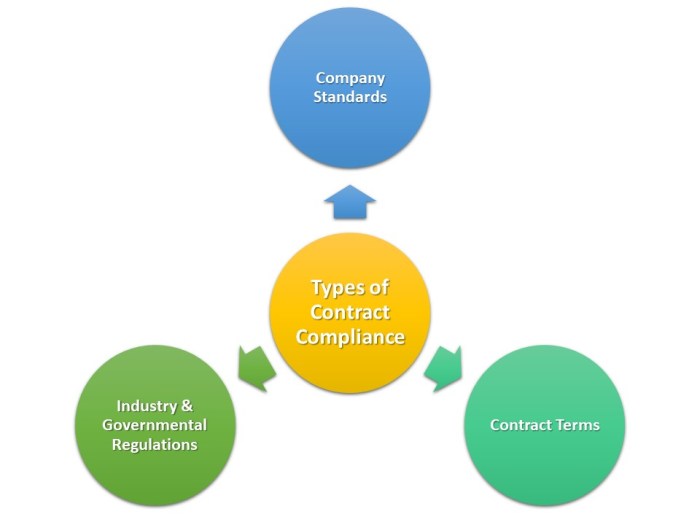
Legal compliance is crucial in contract management to ensure that all parties involved adhere to the laws and regulations governing the agreement. Failure to comply with legal requirements can lead to serious consequences and disputes.
Examples of Common Legal Requirements in Contract Management:
- Ensuring that all parties are of legal age and capacity to enter into a contract.
- Complying with data protection laws when handling sensitive information.
- Adhering to anti-discrimination laws to prevent bias in contract negotiations.
Consequences of Non-Compliance with Legal Regulations:
- Legal disputes and potential lawsuits that can be costly and time-consuming.
- Damaged reputation and loss of trust from stakeholders.
- Potential fines or penalties imposed by regulatory authorities.
Utilizing Technology for Ensuring Legal Compliance:
Technology plays a vital role in contract management by providing tools and software that can help monitor, track, and ensure legal compliance throughout the contract lifecycle. Features such as automated alerts for key dates, e-signature capabilities for secure document signing, and centralized storage for easy access to contract terms can enhance legal compliance efforts.
Legal Consultation
Legal consultation plays a crucial role in ensuring compliance with contract management laws. By seeking advice from legal experts, organizations can navigate complex legal requirements, mitigate risks, and ensure smooth contract negotiations.
Examples of Situations Requiring Legal Consultation
- Drafting or reviewing high-value contracts
- Negotiating terms with international partners
- Resolving contract disputes or breaches
Benefits of Legal Experts in Contract Management
- Expertise in contract law and regulations
- Identification of potential legal risks
- Ensuring contracts adhere to legal standards
How Legal Consultation Mitigates Risks
Legal consultation can help organizations:
- Clarify legal terms and obligations
- Prevent costly litigation
- Ensure compliance with changing laws
In conclusion, Legal Compliance for Contract Management is not just a box to tick but a fundamental aspect that can impact the success of any business. By prioritizing legal consultation and leveraging technology, organizations can navigate the complex landscape of contract management with confidence and integrity.
Query Resolution
What are some examples of common legal requirements in contract management?
Common legal requirements include clauses related to data protection, intellectual property rights, confidentiality, and compliance with industry-specific regulations.
How can technology help ensure legal compliance in contract management?
Technology can automate compliance monitoring, track contract changes, provide alerts for renewal dates, and offer secure storage for contract documents, ensuring transparency and accuracy in compliance efforts.
Why is legal consultation important in contract management?
Legal consultation provides expert guidance on complex legal matters, helps in navigating regulatory frameworks, and ensures that contracts are drafted and executed in compliance with the law, reducing the risk of disputes and legal repercussions.
What benefits do legal experts bring to the contract management process?
Legal experts can offer insights on legal risks, negotiate favorable terms, review contracts for potential pitfalls, and provide strategies to mitigate risks, ultimately safeguarding the organization’s interests and fostering successful contract negotiations.